OKCMOA’s Communications Manager Amber Thompson spoke with David Gariff, PhD, retired Senior Lecturer at the National Gallery of Art and the guest curator of Paul Reed: A Retrospective about Reed’s place in history and the friendship between artist and art historian.
Amber Thompson: You first got to know Paul Reed because of an essay you were writing. What was that initial meeting like?
David Gariff: Well, I had known about Paul’s art; I had known about the DC Color School because I had done my graduate work at the University of Maryland, and I had worked at commercial galleries in DC. So I was familiar with the situation. I had never met Paul personally. I had met a few of the other members but not Paul. Then he gifted a number of drawings to Georgetown University, and to commemorate that they planned to do a symposium. They also wanted to produce a little brochure for the gift, and so I was asked to write that brochure. I wrote that even before I met Paul.
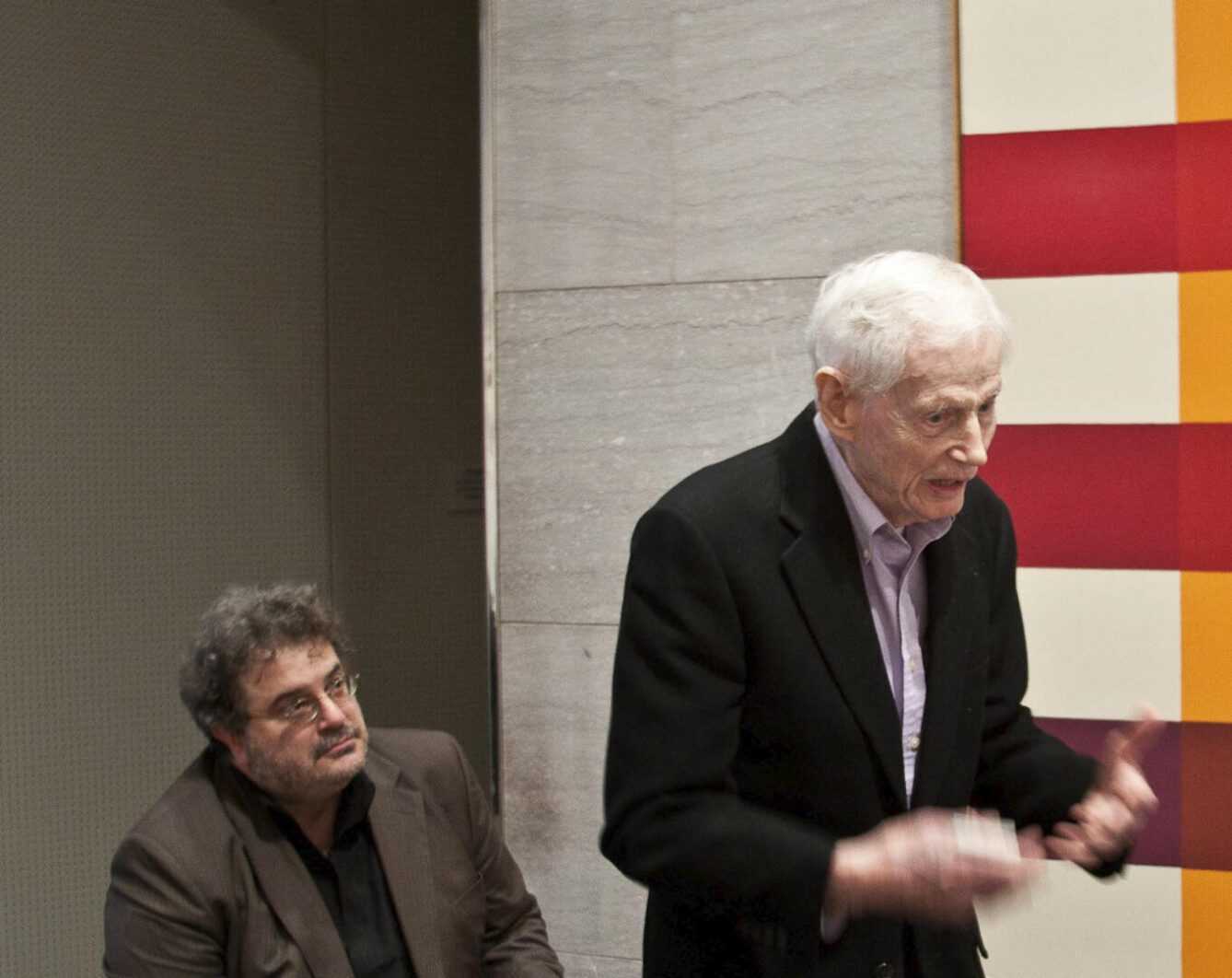
Through that gift and through my essay, we came to meet each other. Our first meeting was really more as friends before we met as an art historian and an artist; we really just had some nice conversations. I went to his house in Arlington, Virginia. He had a smaller studio in Virginia; he worked out of his house down in the basement and out on the patio. I went with the curator from Georgetown [University] LuLen Walker, so we both went out to visit him. And it just started a friendship, and at that time I had no particular ambitions to do anything other than to spend time with him, to learn, ask him questions, become more up to the moment in terms of knowledge about what he was doing. It slowly moved from there. I started making almost weekly visits to his house. His wife Esther was still alive at that time. The three of us would chat, and he showed me a lot of things down in his studio; I had a lot of questions and that began to morph into something more serious or comprehensive about his art and his career. And then there was a large exhibition he helped curate in Virginia at [Workhouse Arts Center in Lorton]. One thing led to another, and we started talking about doing something a little more comprehensive.
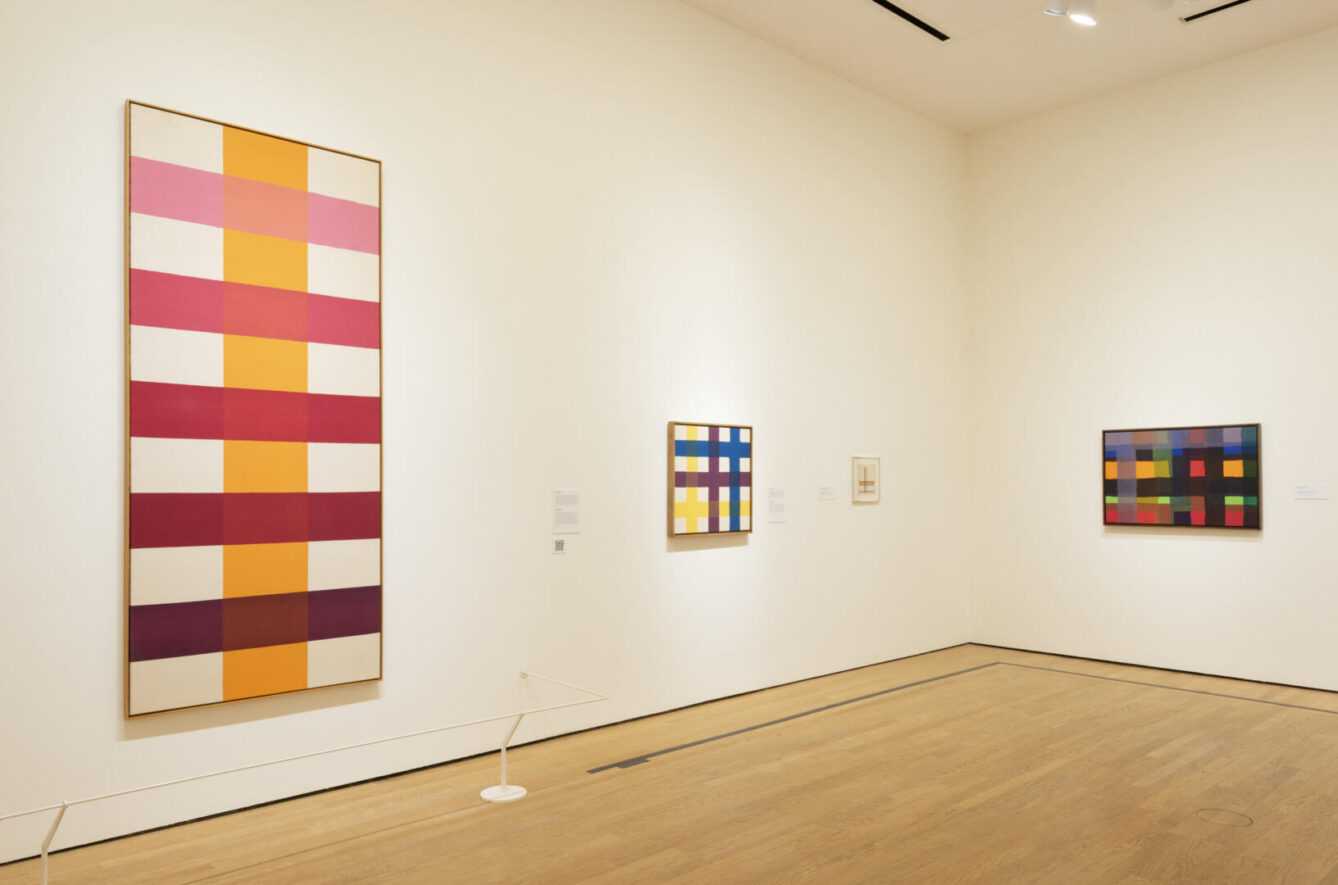
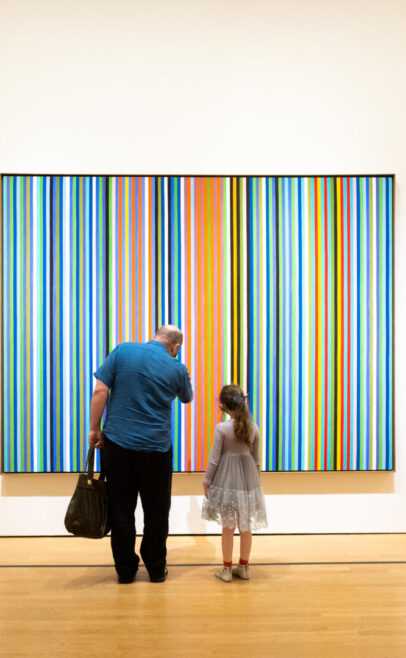
It kind of showed what I felt was one of the issues with Paul Reed, that he had somewhat been neglected in terms of the original group of Color School artists. All of the museums [in DC] have his work, and many museums have many works. And ironically, at that time, the National Gallery did not have a work. So I brought this to the attention of the curator of Modern Art, Harry Cooper. I just thought that that was a shame, since this was the National Gallery, and this was one of the most important movements in Washington, DC, art history, the sixties. Harry agreed, and so he said to me, “Find me a painting.” And as it turns out, at that time I had met a very good friend of Paul’s who was a supporter and almost, in some ways, his estate organizer. His name was Bill McGillicuddy. And Bill had a beautiful, large Paul Reed, and so I broached the subject to Bill whether he’d be willing to donate that to the Gallery, and he said he’d be happy to. There were three criteria that Harry Cooper had given me: the painting would have to be large—and this is very large; it would have to be in perfect condition—and it was in perfect condition; and it would have to come from Paul’s most important period—and this was from the 1960s, 1966. The painting is called Coherence, and it’s currently in the exhibition in Oklahoma. That is now owned by the National Gallery here in DC. We had a little bit of an unveiling of his painting, and his family came, and Bill McGillicuddy was there, and Paul and others. And he could finally get to see his painting in the National Gallery. He was born and grew up here and was close friends with Gene Davis, and they kind of grew up together and went to the same high school. And they had always said to each other, “Someday, we’re going to be in this museum,” when they would ride their bikes to either The Phillips Collection or the National Gallery. Gene was everywhere; he was in all of the [DC] collections. Paul was in all the collections, except the National Gallery. This sort of righted that wrong, and I remember standing next to him, we were looking at the painting, and, I turned to him and said, “So what do you think?” And he said, “I can die a happy man.” So to him, this was the ultimate. To finally have one of his works—and a very serious, important work—in the National Gallery. That was, I think, the crowning achievement. He lived for another three or four years, but that for him was the apex.
AT: I guess I’d imagined that the artist/art historian relationship had come first and then the friendship, but it really was the reverse of that.
DG: Everybody would assume it would have been the other way around. I mean, obviously I was interested in him and in the DC Color School. I had worked in commercial galleries and everything. But when we first met, he was just curious about who I was and what I did, and all that. And it really did start off more as a social thing. Of course, Paul could be kind of prickly at times, and he didn’t suffer fools lightly. I didn’t know any of that when I first met him, but apparently, he took a liking to me; he didn’t kick me out of the house or anything. It was a friendship and we began to really explore his art, and he was interested in things I had been writing, et cetera, and my history. We discovered that we had all of these very strange, serendipitous interactions or paths crossing. For example, in the seventies he was a visiting artist at Arizona State University and also at the Phoenix Art Museum, and that’s when I was, in fact, a student at Arizona State University. I did my BA and my MA at Arizona State University, and I was an art history major. We were there at the same time. I actually didn’t meet him. I knew people around him, professors and people he had been working with. He worked with a very important printmaker [Joe Segura] at Arizona State. So that was very strange, that we had actually been in Arizona at the same time at the same place. There were just these strange convergences that seemed like it was almost destined that at some point our paths would cross again. And that’s sort of what happened.
AT: I spoke earlier with one of Paul’s students from the Corcoran, Mokha Laget, and she was curious about what comes after this and if there will be a resurgence of an interest in this time period and these artists. What are your thoughts on that?

DG: These are questions that Mokha and I talked about and also with Emily Lenz because the Wigmore Gallery represents Paul’s work and they have a beautiful collection of his paintings. They had a little exhibition of his work that just closed recently. I don’t know. That’s a good question. I would say that given the current directions of interests in terms of museum collecting and exhibitions, an artist like Paul Reed or the DC Color School would not be at the top of every curator’s list to do an exhibition on. We’re much more concerned now with artists who have been marginalized, women, minorities, African American artists, indigenous artists, et cetera. That seems to be a bigger direction trying to sort of redress these imbalances in art history. I don’t know. I’m hopeful. I would love to see this continue in some manner. That’s why I thought it was very important to produce a catalog. Essentially, this is the scholarly catalog of Paul Reed. There’s never been a catalog of this substance. He’s been included in a lot of other exhibitions but just as a tangential part. But any art historian or curator or gallery owner who’s going to deal with Paul in the future is going to have to start with this catalog and will have to start with the exhibition in Oklahoma, which fortunately is traveling to Virginia, and will have wider scope. And I’m still hoping that it will actually be in Washington, D.C., where it very much needs to be because Paul was a native son and his whole career unfolded here, basically. So that is a good question. One is hopeful that one’s work will have some legs and will go on. How that might unfold and in what context, I’m not sure. We’ll see.
AT: One of my last questions for you is how you remember Paul as a person.
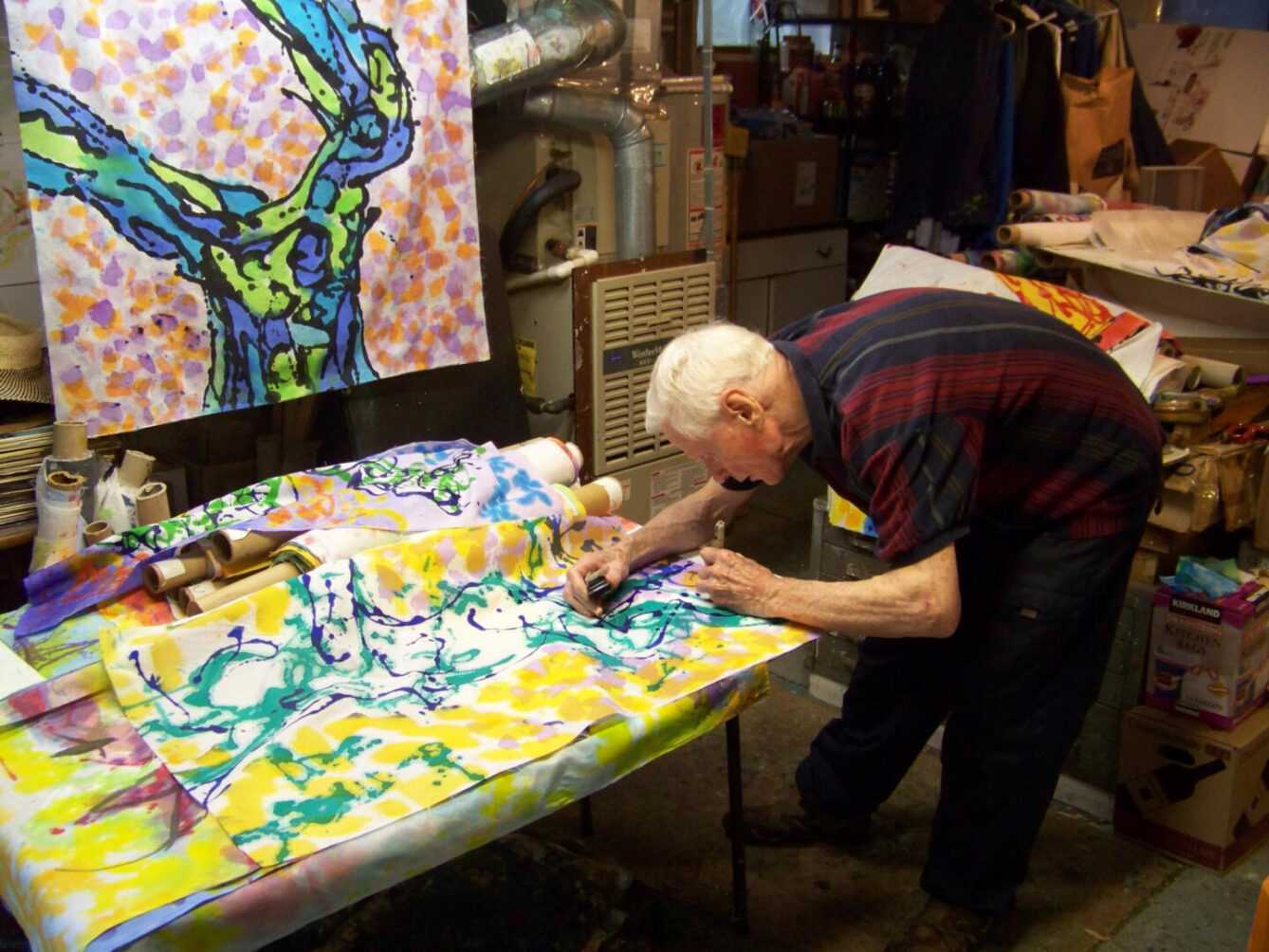
DG: I remember Paul as—how should I put it? He was complicated. Had strong opinions, very strong opinions about art and art history, and the market and the business of art, which he really did not care for. One of the reasons that Paul, I think, was somewhat less well known than someone like Gene Davis, for example, was that Paul did not have the personality of Gene Davis. Gene Davis was incredibly gregarious, social, outgoing—he was Mr. Washington, DC. He went to every opening. He was striping the streets of Pennsylvania Avenue. Paul was just the opposite. Sometimes Paul did not even go to his own openings. He was much more reclusive, much more hermetic. And unfortunately, in this day and age, especially into the twenty-first century, the artist has to be something of a businessman and also a kind of an entrepreneur and also a social butterfly, and that was not really Paul. And I think that affected him. I think one of the reasons we hit it off is because I think he felt that our relationship was—and I don’t want to sound hyperbolic, but—it had a certain purity to it. I wasn’t buying or selling. I was an art historian and my instincts were good. I wasn’t trying to pull a fast one on anybody. And I think that was important to him. We felt a sort of kinship in that regard. For me, he was a wonderful person. He was always kind to me, always willing to talk, in fact he loved to talk. He loved to have me visit; I loved visiting him. He was always very open with me and sometimes you couldn’t get him to stop talking. I think he felt comfortable. But I know from other situations and other things where he’d worked with people, if you approached him the wrong way, he would not give you the time of day. You’d be out, and that would be that. For me it was a friendship. Certainly it was about art and about his art and about his life and about his achievements and accomplishments and that he warranted a more thorough and inclusive kind of discussion about post-1945 abstraction in American Art. He was certainly aware of all those artists, was friends with many of those artists, et cetera. The thing I think I remember most was a kind of affectionate friendship. The art was certainly important, but I think we just enjoyed each other’s company.
AT: I’m glad your paths crossed again. Do you have anything else you want to share?
DG: Well, my main desire would be that people come to see the exhibition, obviously. I think it’s a beautiful exhibition. I think the installation is great. Everybody in Oklahoma did a magnificent job. I’m very proud of it. Everybody was great to work with. In some ways I think it’s very important that it’s in Oklahoma because I’m not sure how many in the general public are aware of what was going on in Washington, DC, in the 1960s. Certainly, in Los Angeles, yes, but in the West or Midwest, even though Paul worked in Arizona and exhibited there quite frequently, I’m not so sure. So I’m hoping a new audience will come to appreciate what this artist was about. I hope they’ll look at the catalog and get a fuller understanding based on what my colleagues wrote in the catalog.
Mokha’s a great painter, very gifted. And she is part of that legacy. Paul had a lot of students because he taught for ten years at the Corcoran. And the number of students, not just in Washington, DC, but those who’ve gone on and moved, et cetera, like Mokha. He was a great teacher. Not all artists are willing to give of themselves like that. They just want to be in their studio, and I understand that. But Paul shared. And he had a huge impact on his later students and the movement in general in DC.
RESOURCES
Exhibition walk through with Dennis Spielman
—
This interview has been edited for length and clarity.