In this first part of OKCMOA Communications Manager Amber Thompson’s interview with Jean Reed Roberts, Paul Reed’s daughter talks about growing up with her artist father and what his early career looked like.
Amber Thompson My first question is I want to know what you would like for visitors to this exhibition to understand about Paul Reed.
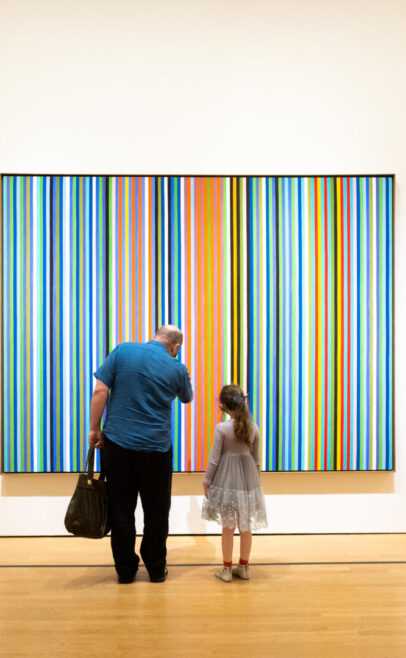
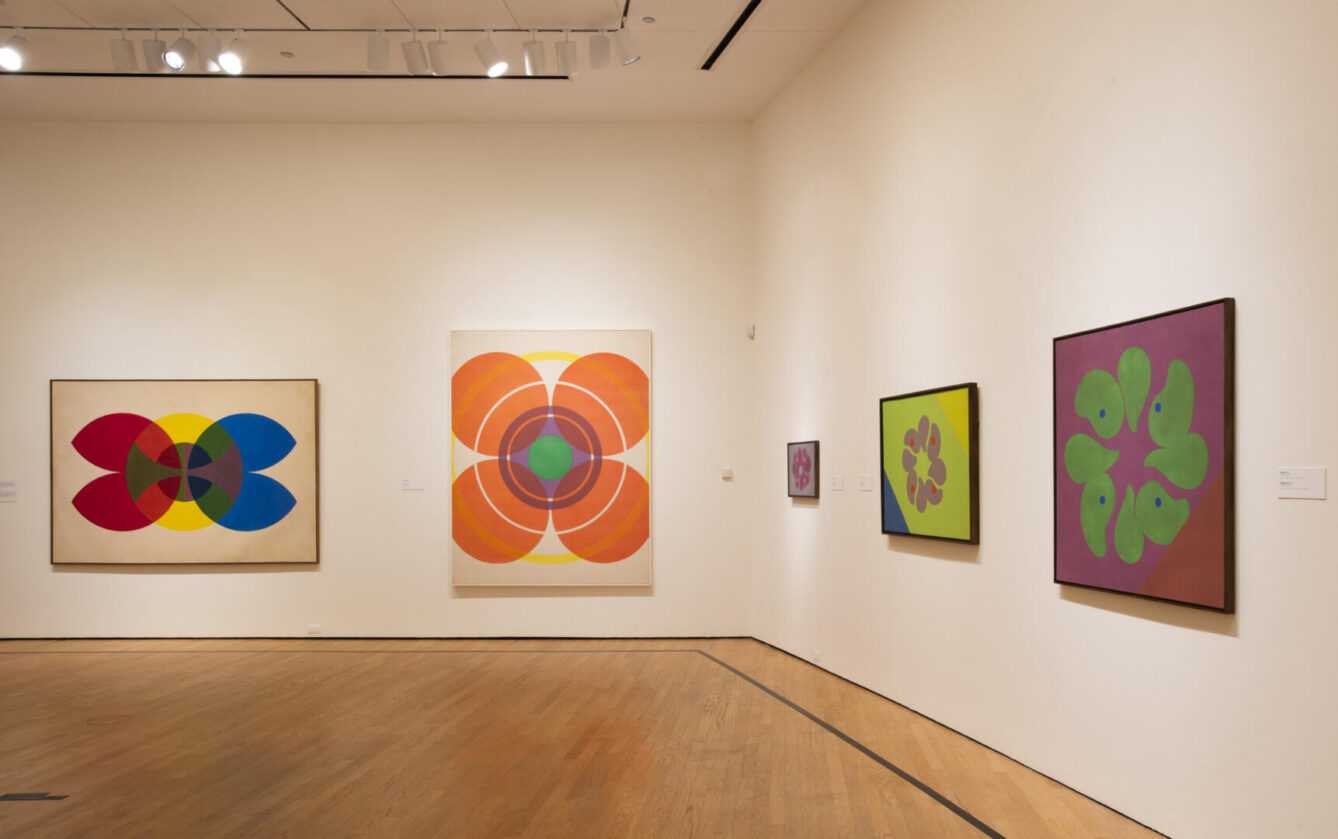
Jean Reed Roberts One, he’s genius in that he and his friends were so innovative in the 50s and 60s. They were the first to try something called acrylic paint, which provided great, wonderful color that they hadn’t been able to achieve in pastel and oil or ink. And it’s a very joyful explosion of color, these paintings. And I think what I’d like people to go home with is the joy of color, the joy of art, the connection between people and how they can express themselves.
AT What was it like to grow up with Paul Reed as your father?
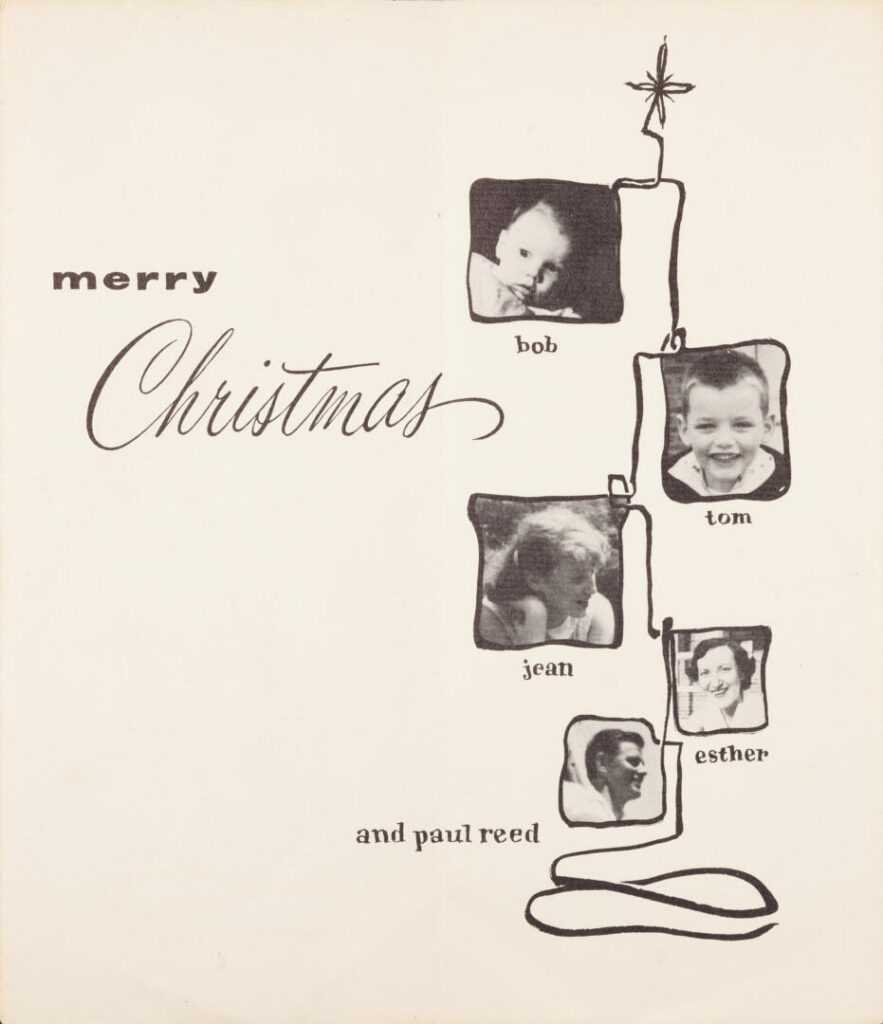
JRR Interesting. Early years he worked in New York, we lived in upper Mont Clair, New Jersey. We didn’t see much of him. When I was twelve, we moved to Virginia, and he set up his own art studio, and that’s when he was around a lot.
I think the most I remember, the most pressing thing was the Catholic Church was on a rampage of censorship of books then, such as some of our people are in the United States today. And Paul didn’t care what they were teaching at school, but he bought me every one of the censored books. And I had an upstairs bedroom, and he would put them on the step. He haunted used bookstores, and as he found those books, he put those paperbacks on my steps. It made me very popular as a middle school child and high school student because I had the books nobody’s parents would let them see. And I can remember sitting in my bedroom with some girlfriends reading Lady Chatterley’s Lover out loud, thinking [gasp] we were so wicked [laughs].
He was very intellectual. He had a very high bar. There were no rewards for perfect As, you were just supposed to get them. We all read the paper, and then we’d argue about it. He loved to argue. But unfortunately, both he and I wanted the last word, and my mother would get very upset with us that we couldn’t just have a peaceful meal [laughs]. We’d have to have, you know, something going on.
He worked very hard and was very disappointed in those years. And that was sad to watch, and I had no sympathy for him and probably wasn’t very nice to him as a teenager. Because the anguish of trying to set his own business up, when the Cuban Blockade happened, his partner took on his little sailboat and sailed to Cuba to rescue his girlfriend, and left Paul with pretty much a disaster at the studio, because it was the ‘57-’58 recession. So it was a really difficult time for them.
So, when I told him I was getting married, I was 18 by then, he said, “Are you asking me or are you telling me?” and I said, “I’m telling you.” [laughs] He said, “Good luck.” [laughs] So, he was an exacting parent. But he was very loving and challenging and certainly made life as a girl and a would-be woman much better than most of my friends’ parents who had no expectations of them. And he had great expectations.
AT I find all of that really interesting to hear, how much of your perspective is not so focused on his art making, his life as an artist. You’re his daughter.
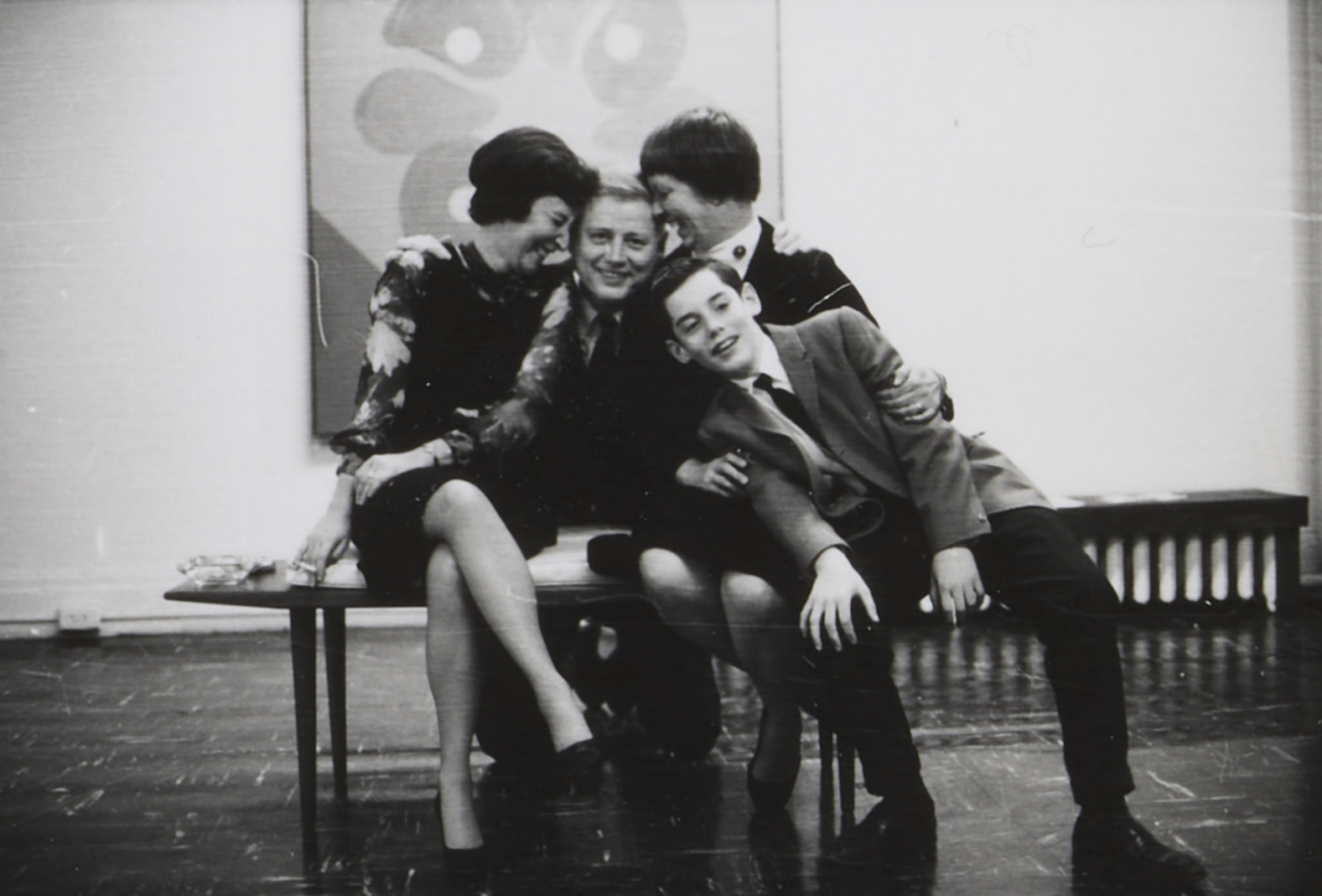
JRR Well, they [hadn’t] really come into their own. I mean he knew Howard [Mehring] and Gene Davis; they’d all been in school together, so they were people, regularly, people in our lives. And my parents had a whole collection of art friends, artists, who weren’t involved in the Color School at all. And my mother came from a large immigrant family. My grandmother always set an empty place at the table: you never knew who’d come in hungry. And my mother, they all knew, my parents could feed them when there was no money. And many of them were destitute at different times. And I’d show up for a visit with two babies, and there’d be babies there, other people’s babies [laughs]. Howard Mehring slept on my parents’ sofa when he was destitute at one time. Several of the others, they all came. One morning I got up and there were children there I didn’t recognize, and I said, “Did someone leave their children, Esther?” And she said, “Oh, they’ll be back for them. They didn’t want to wake them up.” [laughs] It was a very loose lifestyle.
But I was gone by then. I married in 1958, and everything started a few years later, not the relationships. But you know, other people’s children got to go to ballgames, we got to go to the Phillips Museum. I looked at the naked statues, and Paul sat with Gene Davis and looked at [Renoir’s Luncheon of the Boating Party]. It was not a usual childhood, and when they moved and both had jobs, which meant there was always food, their lives were very full.
AT How would you describe his philosophy when it came to creating?
JRR Well, he was self-educated, and so it was very broad. We changed religion a lot at our house. Sometimes we were Buddhists, sometimes we were Presbyterians, sometimes we were original Episcopalians like his family was. He was Scottish. So, he had a very broad view, spiritually. Very spiritual but very broad view of all religions.
I think if he had a spiritual focus, it would be light. He was absolutely obsessed with light and how it changed things and what it looked like. He could spend hours in front of the boat people at the Phillips just talking about the light. He kept a prism on his coffee table, and anyone who would sit still long enough got a whole lecture on light and what it did to color and what the eyeball could see. And he was just very focused on that. And his last years focused on the universe and the vastness and the different new theories. So he had an ever-expanding view of the world and how it worked.
AT Are there any myths about artists that you feel like he challenged or that his work challenges?
JRR Well everyone always said, “Oh, how growing up with an artist—” I said, “He wasn’t an artist at home. He was just my father. [laughs] You dealt with him like all daughters deal with fathers.
And this whole thing about starving artists, there were periods when we had very little money. But—and we certainly knew starving artists and my mother certainly fed them, but mainly they were just people. I mean, I don’t remember—as we’d wander in and out, it was—these people were very loose in their relationships. At a time in the 50s we had you know, all colors of people, all sexual preferences of people. And that’s how I grew up. I didn’t grow up with all these defined categories, where we went to one church and thought one way or whatever. So, it was just like we were part of the world, and that was their occupation. They really weren’t—I didn’t think they were really any different. I mean those are my remembrances of them, not that they had a different head or a different philosophy. Yes, they were very different from lawyers. [laughs] But that’s what made my life wonderful, I mean, I had all these worlds to live in and all these different kinds of people to deal with.
And I think this show is the explosion of joy, I mean, what color does for us. Color is a very joyful part of our lives, and this show just explodes with it, and I don’t think all art does. A lot of it tries to mimic photography or indicate a certain view or whatever. This is just pure color and joy. I don’t think it portrays anything else.
AT Do you think that Paul was joyful when he was creating?
JRR Sometimes. Most of the time, he was very focused. If you wanted to talk about his art, he just lit up. He found his art very joyful. And his life was not always joyful. But I think he really worked at making his paintings beautiful. I mean, our home, it didn’t matter how poor we were or where we lived, it was always lovely. You always knew you’d walked into their home.
AT Were a lot of his paintings on display in the home?
JRR Every inch available. And no one else. He came—I had friends who were artists—and he came to one of our homes, and I had his work up and one of his good friend’s work up, who’d given me a couple pieces; he was furious. He only wanted his work on my walls and his work on his walls. And artists would trade, you know, and he’d put what he got in trade away, which we found a lot of it later. But he wouldn’t display it. His house was for his art. And my house was supposed to be for his art. And my brother’s house was supposed to be for his art, but my sister-in-law didn’t particularly like the art, so there was some conflict there. [laughs] And my other brother lived in a little bitty studio in Greenwich Village; he was a photographer. [laughs] He didn’t have room for much art.
AT What else do you want to say about Paul Reed?
JRR I’m just glad that he is getting this acknowledgement and that people seeing, I don’t want to say the glory of his work, but when you walk into that room with the astonishing amount of color, it is glory. And I think it teaches, you know, abstract art, that’s why I love it—not everybody understands it—but when you see just color, pure color, I think the public has a new awareness of what art is. I think that’s what the color painters gave, you know, the awareness of what the very, very most basic part of any art is, is color.
AT Do you think that he felt that anyone could grasp that, or was that distinct to artists and something for artists to teach, or is it something more innate?
JRR He was always a teacher, and if you came into his presence, he would want to teach you something. My mother said that’s why she drank scotch: she had to hear those lectures over and over. [laughs] But he loved teaching at the Corcoran. If you were at an exhibit or anything you’d hear him telling, explaining the whole thing to someone who obviously had never come across it before. You know, spectators at the opening.
He liked expressing it, and I think if he had been an educated man and things had been different—he was an educated man, he was self-educated—but if he’d had formal education, he would have also written. At the very end, he decided he wanted to write, but his speech was such I couldn’t really understand him. And then I’d read back what I thought he’d told me, and it wouldn’t be right. It was very frustrating for him. But if he’d had another life, I think it would have included writing.
AT That’s really fascinating. Do you have much correspondence from him? Did he write letters or anything?
JRR Notes. Giving me directions. [laughs] Nothing philosophical. [laughs] Directions. I got a lot of directions. One paragraph. Two sentences maybe. On what to do with a painting or a museum. Sometimes he’d want me take over and communicate with people he wouldn’t want to. He kept saying, “You can be my lawyer.” But of course I didn’t get to be his lawyer; I got to be his daughter. [laughs]